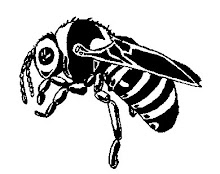
Homo sneakeaus

Welcome All

About this blog


       Oklahoma Wildflowers serves as an introduction to The Wonderful World of Oklahoma Wildflowers with a linked list to the site which which has general plant information and images useful for identification and educational purposes.
        Since space is limited here I will add photos and information about plants blooming during the current month. For more detailed information and images go to the linked address. Unless noted, all photos were taken in Oklahoma
        For detailed information on using the Wonderful World of Oklahoma Wildflowers scroll to the end of this page or click on a flower common name on the list.

Wednesday, September 23, 2009

The Holding Tank

Comming soon: “The Holding Tank"
A companion blog to Oklahoma Wildflowers

       This blog will feature plants not yet on the Oklahoma Wildflowers blog and will provide basic information about each species. As descriptions are finished, the species in the Holding Tank will be moved to the Oklahoma Wildflower blog. I will try to add/move new species weekly or as time permits. A link list of species postings in the Holding Tank will also be provided on the Oklahoma Wildflower blog as well as a link to the Holding Tank blog.

Although the main purpose of the new blog is as described above, other topics may inclue:

Photographic tips and camera equipment
Species from other states
Species not yet identified
Possible contributing pics (yet to be worked out)
Environmental issues
More information on the world of Theos (see Homo sneakeaus on main blog for a little more info)

…and any other fun topics I might think of.


The Holding Tank inmate by Christopher Zabawa
Colorization by George Zabawa

Thanks to Christopher Zabawa, my son, for his imaginative drawings.

(C)2009 by Christopher and George Zabawa

Happy Fallday

Happy Fallday

       The first day of fall (Autumn) in the United States, yesterday, was marked by a cool front-bringing cool, Autumn weather along with more rain to central Oklahoma. Fall of course does not mean the end of plant growing season but merely marks the seasonal transition of species (which had already started). Many late summer and fall species are still thriving and blooming such as Sunflowers, various Bonesets including my favorite, Blue Boneset, the vibrant Blue Sage, Tall Thistles and many others to numerous to mention.
       The end may be near however, since the average first freeze, according to NOAA, in central Oklahoma occurs from October 2nd to October 11th. For more information on freeze dates for specific Oklahoma cities and towns, go to the link below.

Average First Frost in Oklahoma (NOAA)

Wednesday, September 16, 2009

Pale Smartweed


Pale Smartweed (Polygonum lapathifolium)

       Found across the United States, the native Pale Smartweed or Curlytop Knotweed (Polygonum lapathifolium) grow on the shores of lakes, ponds and other moist areas such as ditches, riverbanks and moist fields. A member of the Buckwheat (Polygonacea) family, the Pale Smartweed may colonize areas and become weedy or invasive in some areas.
       Blooming from summer to fall, the three foot tall Pale Smartweed produces 1/8 inch white flowers with white to pink tinged stamens. The flowers which have no petals, but modified petal-like leaves called sepals, form in cluaters along and near the apex of the stems.
       Leaves found alternately along the stem, grow to six inches long and to ½ inch wide. The lanceolate, leaves, tapering at both ends, are attached to the stem by a film-like membrane sheath (ocrea). Stems are hairless and smooth.
       The plain white flower of the Pale Smartweed and hairless stems distinguishes it from other Smartweeds such as Pennsylvania Smartweed (Polygonum pensylvanicum) which have bright pink flowers.
       Young leaves of the Pale Smartweed are ediable and parts of the plant used in treatment of fevers, stomach ailments and burns. Soap like lather produced from this plant may be used as soap substitute for washing.

       It is not recommended that these plants be used as medicine or food since they may have bad side effects. Similar species, misidentified, may cause illness or death.

Photos taken in rural east Norman, Oklahoma adjacent to my pond. September 2009

Monday, September 14, 2009

Slender Ladys Tresses


Slender Ladys Tresses (Spiranthes lacera)

       Found scattered throughout the eastern half of the United States and into Canada, the native Slender Lady’s Tresses Or Northern Slender Lady's Tresses (Spiranthes lacera), a member of the Orchid (Orchidaceae) family, grow in fields and open wooded areas.
       Blooming from late summer into fall, the Slender Lady’s Tresses produce irregular ¼-inch white flowers with green lip petals that are jagged, coarsely fringed or toothed. The flowers form in a distinctive spiral pattern along the stem, typical of species in this family (Spiranthes). The green colored lip petal of the Slender Lady’s Tresses distinguishes this species from other Lady’s Tresses.
       Growing to two feet high the plant appears leafless in the fall. The leaves to two inches long and ½ inch wide, found at the base of the plant, disappear at maturity.
       The Slender Lady’s Tresses are sometimes referred to by the scientific names Spiranthes beckii or Spiranthes gracilis.
       Note: The Orchid family, the largest plant family, containing over 20,000 species and found mostly in tropical areas, occur as far north as the Artic. Although the largest in species numbers, rarely are they found in large numbers. Many species of Orchids are endangered or threatened due to habitat loss or commercial exploitation.

Photos taken rural east Norman, Oklahoma (on my pond dam) Sept 2009

Tuesday, September 8, 2009

False Daisy

Photo above by Christopher Zabawa


Photo above by Christopher Zabawa


False Daisy (Eclipta prostrata)

       Found in the eastern half of the United States, California, Nevada and worldwide, the native False Daisy, a member of the Aster (Asteraceae) family and named for its daisy-like appearance is also known as Yerba de Tajo.
       Commonly found along pond margins, stream margins and other moist/wet areas, the False Daisy blooms from mid-summer into fall. Considered a noxious weed in some areas of its range, such as Oklahoma, it is endangered in New York.
       This sprawling plant, to two feet long, produces 1/3 inch white flowers with many white ray flowers (ray florets) and off white, four lobed disk flowers (disk florets) from midsummer into fall. The visible stamens tips (anthers) are yellow to light brown. The flat green fruit, beginning as green, turns to brown/black at maturity.
       The leaves, lance shaped and coarsely toothed, found opposite along the stem, grow to five inches long and one-inch diameter. Both the reddish stems and leaves have a scattering of white hairs.
       Eclipta prostrata, is also known by the scientific names Eclipta alba, Eclipta erecta ,Verbesina alba and Verbesina prostrata L.
       The young leaves and cooked shoots of plant are edible.
        Eclipta prostrata is an important medicinal plant in China and other areas of the world. It has numerous medicinal uses including treatments for hair loss (leaves), liver ailments, fevers, skin aliments (cuts, sores, athlete's foot), scorpion stings, and an antidote for snakebites. A dye extracted from the plant is used in tattoo ink/dye. Extracts from this plant can be purchased on internet and at local, herbal stores.
       This plant contains nicotine, which acts an insecticide and other active chemicals.

        It is not recommended that these plants be used as medicine or food since they may have bad side effects. Similar species, misidentified, may cause illness or death.

Photos taken at Sutton Wilderness, near Norman Oklahoma and at my pond in rural east Norman.

Tuesday, September 1, 2009

Valley Redstem


Valley Redstem (Ammannia coccinea)

       Commonly known as Valley Redstem, Purple Ammannia and Scarlet Toothcup the Valley Redstem (Ammannia coccinea) a member of the Loosetrife (Lythraceae) family, found primarily in the eastern half of the United States, is also found in California, New Mexico and Arizona. This native plant, blooming summer through fall and found in moist/muddy areas including pond and stream margins, is considered threatened in Pennsylvania and weedy in other areas of it range.
       Growing to 12 inches and taller, found sprawling or upright, the Valley Redstem produce ¼-inch purple to pink, four petaled flowers found at the leaf axis. Lance shaped leaves, found opposite along the stems, are two inches and longer and ¼ inch wide becoming wider near the stem.
       Note: Unlike the non-native Purple Loosetrife (Lythrum salicaria) also in the Loosetrife (Lythraceae) family and considered a noxious weed in many states, the Valley Redstem is not on the most unwanted list.

Photos taken at Sutton Wilderness in Norman, Oklahoma